
According to insights from Future Data Stats, the 5G Military Communication Market was valued at USD 2.53 billion in 2025. It is expected to grow from USD 3.58 billion in 2026 to USD 14.54 billion by 2033, registering a CAGR of 24.4% during the forecast period (2026–2033).
MARKET OVERVIEW:
The 5G Military Communication Market empowers armed forces with ultra-reliable, high-speed networks, enhancing battlefield awareness, decision-making, and operational efficiency. By integrating low-latency communication, secure data transfer, and real-time connectivity, defense agencies can achieve superior coordination, rapid threat response, and tactical superiority across all mission-critical operations.
""Adopting 5G ensures real-time battlefield intelligence, improving operational precision and mission success rates for modern armed forces.""
With seamless integration of AI, IoT, and edge computing, 5G military networks transform communication infrastructures. They enable remote surveillance, autonomous systems, and advanced situational analytics, reducing human error and optimizing mission outcomes. This market addresses the growing demand for network resilience, tactical flexibility, and superior connectivity in modern defense strategies worldwide.
MARKET DYNAMICS:
The 5G Military Communication Market evolves rapidly with trends in AI-driven networks, edge computing, and secure cloud integration. Upcoming solutions focus on interoperable systems and autonomous communication platforms, expanding defense capabilities globally. ""5G adoption accelerates secure, low-latency battlefield communication, opening new growth avenues for defense tech innovators."" Businesses can capitalize on enhanced network speed, reliability, and strategic deployment opportunities.
The market gains momentum from rising defense modernization and demand for real-time situational awareness, while challenges include high infrastructure costs and cybersecurity concerns. Opportunities lie in AI-enabled 5G networks and multi-domain military operations. ""Defense forces investing in 5G see significant operational efficiency gains, driving global adoption and strategic advantages."" Companies can leverage these trends for profitable growth.
5G MILITARY COMMUNICATION MARKET SEGMENTATION ANALYSIS
BY COMPONENT:
Hardware continues to dominate the 5G military communication market as defense agencies prioritize rugged, high-performance infrastructure capable of operating in extreme environments. Advanced antennas, portable base stations, and compact routers are seeing strong procurement demand due to their role in enabling real-time battlefield connectivity. Governments are heavily investing in deployable 5G nodes to strengthen tactical communication networks. The growing need for resilient, high-bandwidth systems in remote and hostile terrains is pushing hardware adoption, making it the primary revenue contributor across modernization programs.
“Rising battlefield digitization is accelerating demand for rugged 5G hardware, positioning infrastructure investments as the backbone of next-gen military communications globally.”
Software and services are gaining traction as militaries shift toward intelligent and secure network ecosystems. Network management platforms, cybersecurity layers, and AI-driven analytics tools are becoming essential to control and protect sensitive data transmissions. Integration and consulting services are also expanding as defense organizations require seamless deployment of complex 5G architectures. The shift toward software-defined networks is enhancing flexibility, scalability, and operational efficiency, creating strong upsell opportunities for vendors offering end-to-end solutions beyond physical infrastructure.
BY COMMUNICATION TYPE:
Ultra-Reliable Low Latency Communication (URLLC) leads adoption due to its critical role in mission-sensitive operations. Military applications demand near-instantaneous data exchange with zero tolerance for delays, especially in combat scenarios, autonomous systems, and missile defense coordination. URLLC enables synchronized operations across multiple units, significantly improving response time and decision accuracy. This segment is benefiting from increasing investments in autonomous warfare technologies and real-time situational awareness systems, reinforcing its dominance in high-priority defense communication deployments.
“Low-latency communication is becoming mission-critical, with defense forces prioritizing URLLC to enable real-time decision-making and autonomous battlefield coordination.”
Enhanced Mobile Broadband (eMBB) and massive Machine-Type Communication (mMTC) are expanding steadily as supplementary technologies. eMBB supports high-data applications such as live video surveillance and augmented reality for training, while mMTC facilitates large-scale IoT deployments across military bases and smart defense ecosystems. As militaries move toward connected infrastructure and data-intensive operations, these communication types are witnessing growing integration. Their combined role in supporting non-combat and support functions ensures consistent demand, complementing the core reliance on ultra-reliable communication systems.
BY APPLICATION:
Command and control remains the most dominant application segment, driven by the need for centralized decision-making and seamless coordination across forces. 5G enables real-time communication between command centers and field units, enhancing operational visibility and responsiveness. Defense organizations are increasingly investing in advanced communication systems to improve battlefield awareness and strategic execution. The ability to transmit high-speed, secure data across multiple nodes is making 5G a vital enabler of modern command infrastructures, strengthening its position as a primary application area.
“Command systems powered by 5G are transforming military decision-making by delivering real-time intelligence and seamless coordination across distributed forces.”
Intelligence, Surveillance, and Reconnaissance (ISR) and battlefield management applications are witnessing rapid growth due to rising geopolitical tensions and demand for continuous monitoring. 5G enhances ISR capabilities by supporting high-resolution video streaming, drone communication, and sensor integration. Logistics and emergency communication are also benefiting from improved connectivity, ensuring efficient supply chain operations and rapid response during crises. These applications are driving diversified adoption, creating multiple revenue streams as defense agencies expand their operational capabilities using next-generation communication technologies.
BY PLATFORM:
Land-based platforms dominate the market due to the extensive deployment of 5G systems across military vehicles and soldier communication systems. Modern ground forces require constant connectivity for navigation, coordination, and threat detection, making 5G integration essential. Wearable communication devices and connected combat vehicles are becoming standard, boosting demand for reliable and scalable network solutions. The high volume of ground troops and equipment ensures continuous investment in land-based communication infrastructure, solidifying its leading market share.
“Ground force modernization is driving 5G adoption, with connected vehicles and soldier systems forming the largest deployment base for military networks.”
Airborne and naval platforms are emerging as high-growth segments as defense forces expand network capabilities across all domains. UAVs, fighter aircraft, and naval vessels increasingly rely on 5G for secure, high-speed data exchange and mission coordination. The integration of 5G into multi-domain operations is enabling synchronized air, sea, and land missions. As militaries adopt network-centric warfare strategies, these platforms are witnessing rising investments, creating strong growth momentum beyond traditional ground-based communication systems.
BY NETWORK TYPE:
Private 5G networks hold the dominant share as defense organizations prioritize secure, isolated communication environments. These networks offer enhanced control, reduced vulnerability to cyber threats, and customized performance tailored to military needs. Governments are investing heavily in dedicated spectrum and infrastructure to ensure uninterrupted communication during critical missions. The ability to operate independently of public networks makes private 5G a strategic asset, driving its widespread adoption across defense establishments globally.
“Secure private networks are becoming the cornerstone of military 5G adoption, ensuring data sovereignty and uninterrupted communication in mission-critical environments.”
Hybrid networks are gaining momentum as militaries seek flexibility and cost efficiency in their communication strategies. By combining private infrastructure with selective public network integration, hybrid models enable broader coverage and scalability. This approach supports non-sensitive operations while maintaining security for critical data. As defense budgets balance modernization with cost optimization, hybrid networks present a compelling value proposition, encouraging adoption across diverse military applications and operational scenarios.
BY FREQUENCY BAND:
Sub-6 GHz dominates the market due to its ability to provide wider coverage and stable connectivity across diverse terrains. Military operations often take place in remote, rugged, and infrastructure-limited environments where consistent signal strength is critical. This frequency band supports reliable communication over long distances, making it ideal for large-scale deployments such as border surveillance and field operations. Defense agencies prefer Sub-6 GHz for its balance of coverage and performance, ensuring uninterrupted communication in both urban and remote mission scenarios.
“Wider coverage and dependable connectivity make Sub-6 GHz the preferred choice for defense forces operating across vast and challenging terrains.”
Millimeter wave (mmWave) is gaining traction in specialized applications that require ultra-high data speeds and capacity. It is particularly useful in dense operational zones, command centers, and short-range high-bandwidth scenarios such as real-time video transmission and simulation training. Although limited by shorter range and higher attenuation, advancements in beamforming and signal enhancement technologies are improving its viability. As militaries adopt data-intensive applications, mmWave is expected to witness increased adoption in targeted, high-performance communication environments.
BY END USER:
The army segment leads the market, driven by the large-scale deployment of communication systems across ground forces. Armies require continuous, real-time connectivity for troop coordination, surveillance, and tactical decision-making. The integration of 5G into soldier systems and armored vehicles is enhancing operational efficiency and situational awareness. With the highest number of personnel and equipment in active operations, the army represents the largest consumer of 5G communication technologies, ensuring sustained demand and investment in this segment.
“Ground forces remain the largest adopters of 5G, leveraging real-time connectivity to enhance coordination, mobility, and battlefield awareness.”
Navy and air force segments are rapidly advancing as multi-domain operations become a strategic priority. Naval forces are integrating 5G into warships and submarines for improved maritime surveillance and communication, while air forces utilize it for aircraft connectivity and UAV operations. The need for synchronized communication across sea and air platforms is driving adoption. As defense strategies evolve toward integrated operations, these segments are experiencing strong growth, contributing significantly to overall market expansion.
BY DEPLOYMENT MODE:
On-premises deployment dominates due to the critical need for data security, control, and reliability in military operations. Defense organizations prefer localized infrastructure to ensure that sensitive information remains within controlled environments. On-premises systems offer low latency, enhanced security protocols, and independence from external networks, making them ideal for mission-critical applications. The demand for secure and resilient communication systems continues to drive investments in on-premises 5G infrastructure across defense establishments worldwide.
“Control over sensitive data and network reliability is driving defense agencies toward on-premises 5G deployments for mission-critical operations.”
Cloud-based deployment is gaining momentum as militaries explore scalable and flexible communication solutions. Cloud integration enables efficient data management, remote access, and advanced analytics capabilities. It supports non-sensitive operations, training simulations, and logistics management, offering cost and operational advantages. As cybersecurity measures improve, confidence in cloud adoption is increasing. This shift is opening new opportunities for vendors to deliver hybrid and cloud-enabled solutions, enhancing the overall efficiency and adaptability of military communication networks.
REGIONAL ANALYSIS:
North America leads the 5G Military Communication Market, driven by substantial defense budgets, advanced R&D infrastructure, and early adoption of next-gen communication networks. The U.S. and Canada focus on integrating AI, IoT, and secure satellite links to enhance operational efficiency and battlefield connectivity. Europe follows with strong investments in interoperable systems and network resilience across NATO countries.
""North America’s early 5G adoption in defense boosts rapid deployment, driving unmatched operational efficiency and global market influence.""
Asia Pacific shows robust growth, led by China, Japan, and South Korea, emphasizing smart military networks and autonomous systems. Latin America and the Middle East & Africa gradually expand adoption, leveraging partnerships and modernization programs to strengthen communication infrastructure. Across all regions, the market thrives on increasing demand for secure, high-speed, low-latency military networks.
RECENT DEVELOPMENTS:
- In January 2025: US DoD awards Lockheed Martin $78M to demonstrate 5G.NTN (Non-Terrestrial Network) capabilities, integrating satellite backhaul for contested Arctic communications.
- In March 2025: Northrop Grumman and AT&T complete live-field testing of a Zero-Trust security overlay for 5G military bases, ensuring secure data flow for over 10,000 tactical endpoints.
- In June 2025: European Defence Fund allocates €150M for the ""HERMES-5G"" project, uniting seven nations to develop a resilient, multi-orbit satellite-5G hybrid waveform for deep battlefield coverage.
- In September 2025: Rohde & Schwarz launches the first software-defined radio (SDR) platform natively supporting both 5G SA and legacy tactical waveforms, adopted by German Bundeswehr for mobile command posts.
- In February 2026: UK Ministry of Defence successfully trials AI-driven spectrum sharing between 5G military networks and civilian infrastructure, reducing interference by 92% during large-scale exercises.
KEY MARKET PLAYERS:
- Lockheed Martin Corporation
- Northrop Grumman Corporation
- Raytheon Technologies Corporation
- Thales Group
- L3Harris Technologies, Inc.
- Boeing Defense, Space & Security
- General Dynamics Corporation
- Elbit Systems Ltd.
- Leonardo S.p.A.
- Nokia Corporation
- Ericsson AB
- Samsung Electronics Co., Ltd.
- Huawei Technologies Co., Ltd.
- Rohde & Schwarz GmbH & Co. KG
- Keysight Technologies, Inc.
- Collins Aerospace (RTX)
- AT&T Inc.
- Verizon Communications Inc.
- NTT Data Corporation
- Fujitsu Limited
5G Military Communication Market-Table of Contents
- 1. Introduction
- 1.1 Market Definition
- 1.2 Scope of the Study
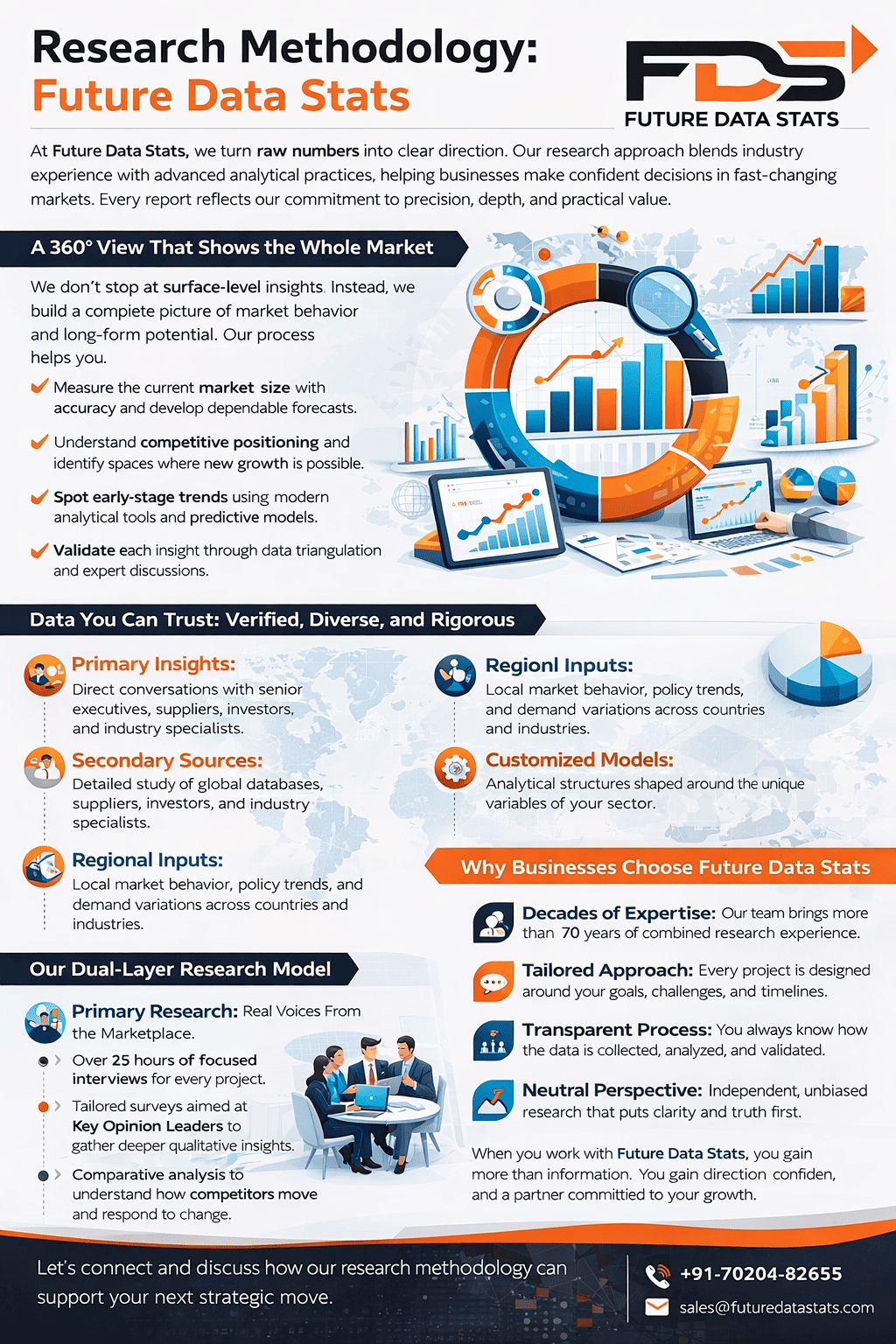
- 1.3 Research Methodology
- 1.4 Assumptions and Limitations
- 2. Executive Summary
- 2.1 Market Snapshot
- 2.2 Key Findings
- 2.3 Analyst Insights
- 3. Market Overview
- 3.1 Market Dynamics
- Drivers
- Restraints
- Opportunities
- Challenges
- 3.2 Value Chain Analysis
- 3.3 Porter’s Five Forces Analysis
- 3.4 Regulatory Framework
- 3.5 Technology Overview (5G in Defense)
- 3.1 Market Dynamics
- 4. 5G Military Communication Market, By Component
- Hardware
- Antennas
- Routers
- Small Cells
- Base Stations
- Software
- Network Management Software
- Security Software
- Services
- Integration Services
- Maintenance & Support
- Consulting Services
- Hardware
- 5. 5G Military Communication Market, By Communication Type
- Enhanced Mobile Broadband (eMBB)
- Ultra-Reliable Low Latency Communication (URLLC)
- Massive Machine-Type Communication (mMTC)
- 6. 5G Military Communication Market, By Application
- Command and Control
- Intelligence, Surveillance, and Reconnaissance (ISR)
- Battlefield Management
- Logistics and Supply Chain Management
- Emergency Communication
- 7. 5G Military Communication Market, By Platform
- Land-Based
- Military Vehicles
- Soldier Systems
- Airborne
- Fighter Aircraft
- UAVs (Unmanned Aerial Vehicles)
- Naval
- Warships
- Submarines
- Land-Based
- 8. 5G Military Communication Market, By Network Type
- Private 5G Networks
- Hybrid Networks
- 9. 5G Military Communication Market, By End User
- Army
- Navy
- Air Force
- 10. 5G Military Communication Market, By Frequency Band
- Sub-6 GHz
- Millimeter Wave (mmWave)
- 11. 5G Military Communication Market, By Deployment Mode
- On-Premises
- Cloud-Based
- 12. 5G Military Communication Market, By Region
- North America
- United States
- Canada
- Europe
- Germany
- United Kingdom
- France
- Rest of Europe
- Asia-Pacific
- China
- India
- Japan
- South Korea
- Rest of Asia-Pacific
- Middle East & Africa
- GCC
- South Africa
- Rest of MEA
- Latin America
- Brazil
- Mexico
- Rest of Latin America
- North America
- 13. Competitive Landscape
- 13.1 Market Share Analysis
- 13.2 Company Profiling
- 13.3 Strategic Initiatives
- Mergers & Acquisitions
- Partnerships
- Product Launches
- 14. Company Profiles
- Overview
- Financials
- Product Portfolio
- Recent Developments
List of Figures
- Figure 1: 5G Military Communication Market Research Methodology
- Figure 2: Market Size Estimation Approach
- Figure 3: Value Chain Analysis
- Figure 4: Porter’s Five Forces Analysis
- Figure 5: Global Market Size Forecast (Year-wise)
- Figure 6: Market Share by Component
- Figure 7: Market Share by Communication Type
- Figure 8: Market Share by Application
- Figure 9: Market Share by Platform
- Figure 10: Market Share by Network Type
- Figure 11: Market Share by End User
- Figure 12: Market Share by Frequency Band
- Figure 13: Market Share by Deployment Mode
- Figure 14: Regional Market Share Analysis
- Figure 15: Competitive Benchmarking
List of Tables
- Table 1: Market Definition and Scope
- Table 2: Key Assumptions
- Table 3: Market Dynamics Summary
- Table 4: 5G Military Communication Market Size (Historical & Forecast)
- Table 5: Market by Component (Value)
- Table 6: Market by Communication Type (Value)
- Table 7: Market by Application (Value)
- Table 8: Market by Platform (Value)
- Table 9: Market by Network Type (Value)
- Table 10: Market by End User (Value)
- Table 11: Market by Frequency Band (Value)
- Table 12: Market by Deployment Mode (Value)
- Table 13: Market by Region (Value)
- Table 14: Competitive Landscape Overview
- Table 15: Company Comparison Matrix
5G Military Communication Market Segmentation
By Component:
- Hardware
- Antennas
- Routers
- Small Cells
- Base Stations
- Software
- Network Management Software
- Security Software
- Services
- Integration Services
- Maintenance & Support
- Consulting Services
By Communication Type:
- Enhanced Mobile Broadband (eMBB)
- Ultra-Reliable Low Latency Communication (URLLC)
- Massive Machine-Type Communication (mMTC)
By Application:
- Command and Control
- Intelligence, Surveillance, and Reconnaissance (ISR)
- Battlefield Management
- Logistics and Supply Chain Management
- Emergency Communication
By Platform:
- Land-Based
- Military Vehicles
- Soldier Systems
- Airborne
- Fighter Aircraft
- UAVs (Unmanned Aerial Vehicles)
- Naval
- Warships
- Submarines
By Network Type:
- Private 5G Networks
- Hybrid Networks
By End User:
- Army
- Navy
- Air Force
By Frequency Band:
- Sub-6 GHz
- Millimeter Wave (mmWave)
By Deployment Mode:
- On-Premises
- Cloud-Based
By Geography:
- North America (USA, Canada, Mexico)
- Europe (UK, Germany, France, Italy, Spain, Rest of Europe)
- Asia-Pacific (China, Japan, Australia, South Korea, India, Rest of Asia-Pacific)
- South America (Brazil, Argentina, Rest of South America)
- Middle East and Africa (GCC Countries, South Africa, Rest of MEA)
5G Military Communication Market Dynamic Factors
Drivers:
- Boosts real-time battlefield communication and situational awareness.
- Enables low-latency, secure, and high-speed data transmission.
- Supports AI, IoT, and autonomous defense systems integration.
Restraints:
- Requires high infrastructure investment and maintenance costs.
- Faces strict cybersecurity and data privacy regulations.
- Encounters interoperability challenges with legacy military systems.
Opportunities:
- Expands adoption in multi-domain military operations.
- Enables development of AI-driven 5G tactical networks.
- Supports global defense modernization programs and collaborations.
Challenges:
- Ensuring secure and resilient networks in hostile environments.
- Rapid technological changes demand constant system upgrades.
- Limited skilled workforce for deployment and maintenance.
5G Military Communication Market Regional Key Trends
North America:
- Leads adoption with advanced defense R&D.
- Focuses on AI and autonomous system integration.
- Expands satellite-linked secure 5G networks.
Europe:
- Prioritizes interoperable military communication systems.
- Invests in network resilience across NATO operations.
- Enhances real-time intelligence sharing capabilities.
Asia Pacific:
- China and Japan accelerate smart military network deployment.
- Focuses on autonomous and unmanned defense systems.
- Strengthens cybersecurity and tactical communication infrastructure.
Latin America:
- Modernizes defense networks through partnerships.
- Increases adoption in urban and border security operations.
- Invests in secure, high-speed tactical communication systems.
Middle East & Africa:
- Expands military modernization programs with 5G networks.
- Integrates AI-enabled defense communication solutions.
- Enhances battlefield coordination and real-time decision-making.
Frequently Asked Questions














