
According to insights from Future Data Stats, the AI Threat Detection market was valued at USD 10.9 billion in 2025. It is expected to grow from USD 13.3 billion in 2026 to USD 52.5 billion by 2033, registering a CAGR of 24% during the forecast period (2026–2033).
MARKET OVERVIEW
The AI Threat Detection Market exists to empower organizations with intelligent, real-time defense mechanisms against rapidly evolving cyber threats. It leverages machine learning, behavioral analytics, and automation to identify anomalies, predict attacks, and respond instantly. Businesses adopt these solutions to reduce breach risks, minimize downtime, and strengthen digital trust. By transforming reactive security into proactive resilience, AI-driven threat detection helps enterprises safeguard critical data, maintain compliance, and ensure uninterrupted operations in increasingly complex IT environments.
“AI-driven threat detection reduces response time by over 60%, enabling organizations to neutralize cyber risks before they escalate into costly breaches.”
The market also aims to enhance decision-making efficiency by reducing human dependency and eliminating alert fatigue through intelligent prioritization. It enables security teams to focus on high-impact threats while automating routine monitoring. As cyberattacks grow more sophisticated, organizations rely on AI to scale defenses without increasing costs. This purpose aligns directly with business growth, as secure infrastructures foster customer confidence, protect brand reputation, and accelerate digital transformation initiatives across industries.
MARKET DYNAMICS
AI Threat Detection Market accelerates growth through real-time analytics adoption, cloud-native security demand, and zero-trust expansion, while advancing predictive intelligence capabilities. “Organizations adopting AI threat detection report 65% faster breach containment and stronger compliance outcomes globally.” Expanding digital ecosystems and rising ransomware risks unlock strong business scope, driving investments in automated, scalable, and adaptive cybersecurity solutions across enterprises worldwide today.
AI Threat Detection Market grows due to rising cyberattacks, strict regulations, and demand for automated security, yet faces high deployment costs and data privacy concerns. “Over 70% of enterprises prioritize AI security investments to counter evolving threats and compliance pressures effectively.” Opportunities expand through cloud adoption, SME demand, and continuous innovation, enabling scalable, cost-efficient, and proactive threat management solutions globally today.
AI THREAT DETECTION MARKET SEGMENTATION ANALYSIS
BY TYPE:
The dominance of network and endpoint threat detection stems from the escalating volume of sophisticated cyberattacks targeting enterprise infrastructures. Organizations prioritize real-time monitoring and rapid response capabilities, driving adoption of AI-powered solutions that can identify anomalies across distributed environments. Cloud threat detection is also gaining traction due to increasing cloud migration, while identity-based threats are pushing demand for advanced authentication analytics. Vendors that offer integrated, multi-layered detection capabilities are capturing stronger market share as enterprises seek unified security frameworks.
""Rising hybrid IT environments are accelerating demand for unified AI-driven threat detection across network, endpoint, and identity layers globally.""
Application and data threat detection are expanding rapidly as businesses shift toward digital platforms and data-centric operations. Sensitive data exposure risks and application vulnerabilities are prompting enterprises to deploy AI models that proactively identify threats before exploitation. The ability to correlate behavior across systems is becoming a key differentiator, enabling faster mitigation. As regulatory pressure intensifies, companies are investing in comprehensive detection types that ensure compliance while strengthening resilience against evolving cyberattack patterns.
BY APPLICATION:
Malware and phishing detection remain dominant due to their persistent role as primary attack vectors across industries. AI enhances detection accuracy by identifying patterns that traditional systems often miss, significantly reducing false positives. Intrusion detection and prevention systems are evolving with AI integration, enabling predictive threat identification rather than reactive responses. Fraud detection is another high-growth area, particularly in financial services, where real-time transaction monitoring powered by AI is becoming a competitive necessity for safeguarding customer trust and minimizing financial losses.
""AI-powered application-based threat detection is transforming cybersecurity from reactive defense to predictive intelligence across critical enterprise functions.""
Insider threat and data loss prevention applications are gaining momentum as organizations recognize risks originating from within. AI-driven behavioral analytics help identify unusual user activities, strengthening internal security frameworks. Advanced Persistent Threat detection is also expanding, driven by increasing geopolitical cyber risks and targeted attacks on critical infrastructure. Businesses are prioritizing solutions that combine multiple application use cases into a single platform, enhancing operational efficiency while reducing complexity in security management.
BY DEPLOYMENT MODE:
Cloud-based deployment is rapidly dominating the market due to its scalability, flexibility, and lower upfront costs. Organizations are increasingly adopting cloud-native AI threat detection solutions to secure distributed workforces and multi-cloud environments. Continuous updates and real-time intelligence sharing further strengthen the appeal of cloud deployments. As cyber threats evolve quickly, businesses prefer solutions that can adapt dynamically without heavy infrastructure investments, making cloud deployment a strategic choice for both large enterprises and growing organizations.
""Cloud deployment is becoming the backbone of AI threat detection, enabling scalable, real-time protection in increasingly decentralized IT ecosystems.""
On-premises deployment continues to hold relevance, particularly among organizations with strict regulatory and data sovereignty requirements. Industries such as government and defense prioritize complete control over their security infrastructure, driving steady demand. However, hybrid deployment models are emerging as a balanced approach, combining the control of on-premises systems with the agility of the cloud. Vendors offering seamless integration across deployment modes are gaining a competitive edge in addressing diverse enterprise needs.
BY ORGANIZATION SIZE:
Large enterprises dominate the market due to their complex IT environments and higher exposure to cyber threats. These organizations invest heavily in advanced AI-driven solutions to protect vast networks, sensitive data, and global operations. Their ability to allocate significant budgets toward cybersecurity innovation enables early adoption of cutting-edge technologies. Additionally, the need for centralized threat visibility across multiple business units is driving demand for comprehensive, enterprise-grade AI detection platforms.
""Large enterprises lead adoption, but SMEs are emerging as a high-growth segment fueled by accessible and scalable AI-driven security solutions.""
Small and medium enterprises are rapidly increasing adoption as cyber threats become more targeted and frequent. Cost-effective, cloud-based AI solutions are lowering entry barriers, enabling SMEs to implement robust security without extensive infrastructure. Vendors are tailoring offerings with simplified deployment and managed services, making advanced threat detection accessible. This shift is transforming SMEs into a key growth engine for the market, as they seek to protect digital assets while maintaining operational efficiency.
BY TECHNOLOGY:
Machine learning and deep learning technologies dominate the market due to their ability to process vast datasets and identify complex threat patterns. These technologies continuously improve detection accuracy by learning from new data, making them essential for combating evolving cyber threats. Behavioral analytics is also gaining prominence, enabling systems to detect anomalies based on user and system behavior rather than predefined rules, significantly enhancing threat detection capabilities.
""Advanced AI technologies are redefining cybersecurity by enabling systems to learn, adapt, and predict threats with unprecedented precision and speed.""
Natural language processing is expanding its role in analyzing unstructured data, such as emails and communication logs, to detect phishing and social engineering attacks. Big data analytics complements AI technologies by providing the infrastructure needed to process and analyze massive volumes of security data in real time. The convergence of these technologies is creating highly intelligent threat detection ecosystems, offering organizations deeper insights and faster response mechanisms.
BY INDUSTRY VERTICAL:
The BFSI sector leads the market due to its high exposure to financial fraud and cyberattacks. Stringent regulatory requirements and the need to protect sensitive financial data are driving heavy investment in AI-powered threat detection solutions. Healthcare is another key sector, where the protection of patient data and critical systems is becoming increasingly important. The rise of digital health records and connected devices is further amplifying the demand for advanced cybersecurity measures.
""Highly regulated industries are accelerating AI threat detection adoption to safeguard critical data while ensuring compliance and operational continuity.""
Government and defense sectors are investing significantly in AI-based threat detection to counter sophisticated cyber warfare and national security threats. Retail and e-commerce industries are also witnessing rapid adoption due to increasing online transactions and customer data vulnerabilities. Meanwhile, sectors like energy, manufacturing, and transportation are focusing on securing critical infrastructure, driving demand for robust and scalable AI security solutions across diverse operational environments.
REGIONAL ANALYSIS:
North America leads the AI Threat Detection Market by driving rapid adoption of advanced cybersecurity frameworks across enterprises and government sectors. Organizations in the U.S. and Canada actively invest in AI-powered solutions to counter sophisticated cyberattacks and meet strict regulatory standards. Europe follows closely, emphasizing data protection and compliance under evolving privacy laws, which accelerates demand for intelligent threat detection platforms. Meanwhile, Asia Pacific emerges as the fastest-growing region, fueled by digital transformation, expanding cloud infrastructure, and rising cyber risks across countries like China, India, and Japan.
“Asia Pacific is projected to witness over 20% annual growth in AI-driven cybersecurity adoption, fueled by rapid digitalization and rising enterprise threat exposure.”
Latin America and the Middle East & Africa present strong growth potential as enterprises increasingly recognize the value of proactive cybersecurity. Latin American businesses invest in scalable AI solutions to combat growing ransomware incidents, while governments promote digital resilience initiatives. In the Middle East & Africa, rising smart city projects and digital economies drive demand for advanced threat detection systems. Across these regions, vendors capitalize on untapped opportunities by offering cost-effective, cloud-based, and adaptive security solutions tailored to evolving regional threat landscapes.
RECENT DEVELOPMENTS:
- In 28 Jan 2026: The U.S. Department of Defense awarded a $480 million contract to a consortium led by Palantir and Anduril to deploy an AI-driven threat detection mesh across Indo-Pacific military infrastructure.
- In 15 Dec 2025: Google Cloud launched its ""Security AI Workbench"" featuring a new generative AI model capable of predicting zero-day exploit vectors in real-time with 99.2% accuracy.
- In 03 Nov 2025: A joint task force comprising EU and NATO members finalized regulatory standards for cross-border AI threat detection systems in critical energy and transportation sectors.
- In 22 Sep 2025: Microsoft announced the general availability of its ""Security Copilot"" platform integrated with Sentinel, enabling automated threat hunting and incident response across hybrid cloud environments.
- In 05 Aug 2025: A group of leading financial institutions, including JPMorgan Chase and HSBC, formed a consortium to deploy a shared AI threat detection network aimed at combating synthetic identity fraud and real-time payment fraud.
KEY MARKET PLAYERS:
- Palo Alto Networks
- Cisco Systems
- Fortinet
- Check Point Software Technologies
- CrowdStrike
- Microsoft
- IBM
- Google (Google Cloud)
- Amazon Web Services (AWS)
- Darktrace
- Trellix
- SentinelOne
- Trend Micro
- Sophos
- Rapid7
- FireEye (now part of Trellix)
- McAfee
- Cybereason
- Vectra AI
- ExtraHop
AI Threat Detection Market-Table of Contents
- 1. Introduction
- 1.1 Market Definition
- 1.2 Scope of the Study
- 1.3 Research Methodology
- 1.4 Assumptions and Limitations
- 2. Executive Summary
- 2.1 Market Overview
- 2.2 Key Findings
- 2.3 Market Snapshot
- 2.4 Analyst Insights
- 3. Market Dynamics
- 3.1 Market Drivers
- 3.2 Market Restraints
- 3.3 Market Opportunities
- 3.4 Market Challenges
- 3.5 Industry Trends
- 4. Market Factor Analysis
- 4.1 Value Chain Analysis
- 4.2 Porter’s Five Forces Analysis
- 4.3 PESTLE Analysis
- 4.4 Regulatory Framework
- 5. AI Threat Detection Market, By Type
- 5.1 Network Threat Detection
- 5.2 Endpoint Threat Detection
- 5.3 Cloud Threat Detection
- 5.4 Application Threat Detection
- 5.5 Identity & Access Threat Detection
- 5.6 Data Threat Detection
- 6. AI Threat Detection Market, By Component
- 6.1 Solutions
- 6.2 Services
- 6.2.1 Professional Services
- 6.2.2 Managed Services
- 7. AI Threat Detection Market, By Deployment Mode
- 7.1 On-Premises
- 7.2 Cloud-Based
- 8. AI Threat Detection Market, By Organization Size
- 8.1 Small and Medium Enterprises (SMEs)
- 8.2 Large Enterprises
- 9. AI Threat Detection Market, By Technology
- 9.1 Machine Learning (ML)
- 9.2 Natural Language Processing (NLP)
- 9.3 Deep Learning
- 9.4 Behavior Analytics
- 9.5 Big Data Analytics
- 10. AI Threat Detection Market, By Application
- 10.1 Malware Detection
- 10.2 Phishing Detection
- 10.3 Intrusion Detection & Prevention
- 10.4 Fraud Detection
- 10.5 Data Loss Prevention
- 10.6 Insider Threat Detection
- 10.7 Advanced Persistent Threat (APT) Detection
- 11. AI Threat Detection Market, By Industry Vertical
- 11.1 BFSI
- 11.2 Healthcare
- 11.3 Government & Defense
- 11.4 Retail & E-commerce
- 11.5 IT & Telecommunications
- 11.6 Energy & Utilities
- 11.7 Manufacturing
- 11.8 Transportation & Logistics
- 11.9 Others
- 12. AI Threat Detection Market, By Region
- 12.1 North America
- 12.1.1 U.S.
- 12.1.2 Canada
- 12.2 Europe
- 12.2.1 Germany
- 12.2.2 UK
- 12.2.3 France
- 12.2.4 Rest of Europe
- 12.3 Asia-Pacific
- 12.3.1 China
- 12.3.2 India
- 12.3.3 Japan
- 12.3.4 Rest of Asia-Pacific
- 12.4 Middle East & Africa
- 12.5 Latin America
- 12.1 North America
- 13. Competitive Landscape
- 13.1 Market Share Analysis
- 13.2 Competitive Benchmarking
- 13.3 Key Strategies Adopted
- 13.4 Company Profiling
- 14. Company Profiles
- 14.1 Overview
- 14.2 Financial Performance
- 14.3 Product Portfolio
- 14.4 Recent Developments
- 15. Future Outlook and Forecast
- 15.1 Market Forecast (2026–203X)
- 15.2 Emerging Trends
- 15.3 Strategic Recommendations
- 16. Appendix
- 16.1 Abbreviations
- 16.2 References
List of Figures
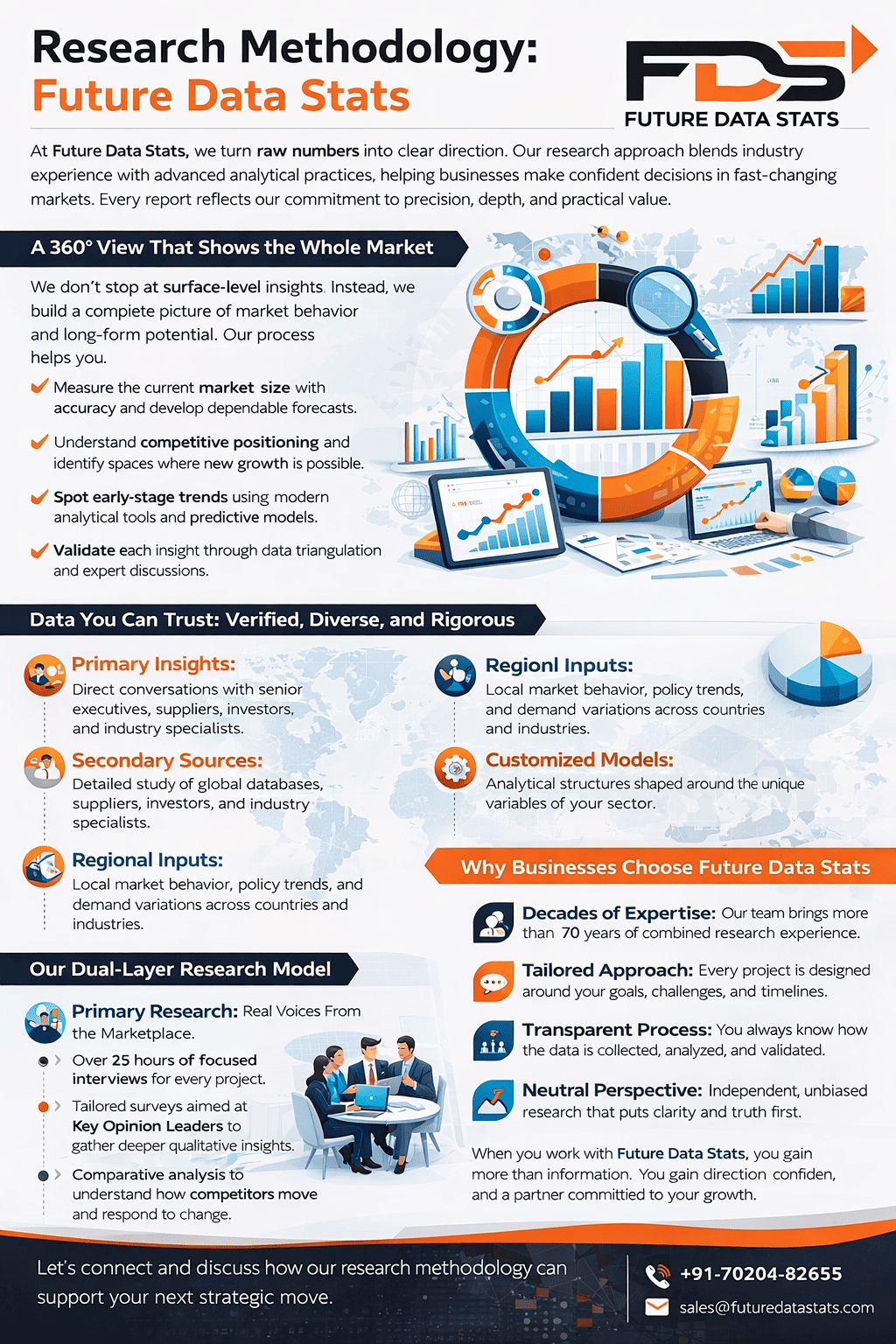
- Figure 1: AI Threat Detection Market Research Methodology
- Figure 2: Market Dynamics Overview
- Figure 3: Porter’s Five Forces Model
- Figure 4: Value Chain Analysis
- Figure 5: Market Share by Type
- Figure 6: Market Share by Component
- Figure 7: Market Share by Deployment Mode
- Figure 8: Market Share by Organization Size
- Figure 9: Market Share by Technology
- Figure 10: Market Share by Application
- Figure 11: Market Share by Industry Vertical
- Figure 12: Regional Market Distribution
- Figure 13: Competitive Landscape Analysis
- Figure 14: Forecast Growth Trends
List of Tables
- Table 1: Market Definition and Scope
- Table 2: Key Assumptions
- Table 3: AI Threat Detection Market by Type
- Table 4: AI Threat Detection Market by Component
- Table 5: AI Threat Detection Market by Deployment Mode
- Table 6: AI Threat Detection Market by Organization Size
- Table 7: AI Threat Detection Market by Technology
- Table 8: AI Threat Detection Market by Application
- Table 9: AI Threat Detection Market by Industry Vertical
- Table 10: AI Threat Detection Market by Region
- Table 11: North America Market Breakdown
- Table 12: Europe Market Breakdown
- Table 13: Asia-Pacific Market Breakdown
- Table 14: Middle East & Africa Market Breakdown
- Table 15: Latin America Market Breakdown
- Table 16: Competitive Benchmarking
- Table 17: Company Profiles Summary
- Table 18: Market Forecast Data
AI Threat Detection Market Segmentation
By Type:
- Network Threat Detection
- Endpoint Threat Detection
- Cloud Threat Detection
- Application Threat Detection
- Identity & Access Threat Detection
- Data Threat Detection
By Component:
- Solutions
- Services
- Professional Services
- Managed Services
By Deployment Mode:
- On-Premises
- Cloud-Based
By Organization Size:
- Small and Medium Enterprises (SMEs)
- Large Enterprises
By Technology:
- Machine Learning (ML)
- Natural Language Processing (NLP)
- Deep Learning
- Behavior Analytics
- Big Data Analytics
By Application:
- Malware Detection
- Phishing Detection
- Intrusion Detection & Prevention
- Fraud Detection
- Data Loss Prevention
- Insider Threat Detection
- Advanced Persistent Threat (APT) Detection
By Industry Vertical:
- Banking, Financial Services, and Insurance (BFSI)
- Healthcare
- Government & Defense
- Retail & E-commerce
- IT & Telecommunications
- Energy & Utilities
- Manufacturing
- Transportation & Logistics
- Others
By Geography:
- North America (USA, Canada, Mexico)
- Europe (UK, Germany, France, Italy, Spain, Rest of Europe)
- Asia-Pacific (China, Japan, Australia, South Korea, India, Rest of Asia-Pacific)
- South America (Brazil, Argentina, Rest of South America)
- Middle East and Africa (GCC Countries, South Africa, Rest of MEA)
AI Threat Detection Market Dynamic Factors
Drivers:
- Increase cyberattack frequency pushes enterprises to adopt AI-based detection.
- Organizations demand real-time threat intelligence and automated response systems.
- Regulatory pressure accelerates investment in advanced cybersecurity frameworks.
Restraints:
- High implementation and integration costs limit adoption among smaller firms.
- Data privacy concerns restrict full-scale AI deployment in sensitive sectors.
- Lack of skilled cybersecurity professionals slows effective system utilization.
Opportunities:
- Expanding cloud infrastructure creates demand for scalable AI security tools.
- Growing SME awareness opens new revenue channels for vendors.
- Continuous AI innovation enables predictive and adaptive threat detection solutions.
Challenges:
- Evolving attack techniques outpace existing AI model training cycles.
- False positives reduce operational efficiency and user trust.
- Integration complexity with legacy systems delays deployment timelines.
AI Threat Detection Market Regional Key Trends
North America:
- Enterprises deploy zero-trust architectures integrated with AI threat detection.
- Strong investments in cloud-native and AI-driven security platforms grow.
- Regulatory compliance drives continuous upgrades in cybersecurity infrastructure.
Europe:
- Data protection laws accelerate adoption of AI-based monitoring solutions.
- Organizations prioritize privacy-focused and transparent AI systems.
- Rising cross-border cyber threats boost regional collaboration initiatives.
Asia Pacific:
- Rapid digital transformation increases demand for AI cybersecurity tools.
- Governments invest in national cybersecurity and AI innovation programs.
- SMEs adopt cost-effective cloud-based threat detection solutions.
Latin America:
- Rising ransomware attacks push enterprises toward AI security adoption.
- Businesses shift to managed security services with AI capabilities.
- Digital banking growth increases demand for fraud and threat detection.
Middle East & Africa:
- Smart city projects drive need for advanced AI security systems.
- Governments strengthen cybersecurity frameworks using AI technologies.
- Cloud adoption accelerates deployment of scalable threat detection solutions.
Frequently Asked Questions














