
According to insights from Future Data Stats, the Muay Thai Market was valued at USD 1.80 billion in 2025. It is expected to grow from USD 1.93 billion in 2026 to USD 3.16 billion by 2033, registering a CAGR of 7.3% during the forecast period (2026–2033).
MARKET OVERVIEW:
Muay Thai Market purpose centers on accelerating global combat sports engagement while delivering structured training, fitness transformation, and competitive performance pathways. It empowers gyms, academies, and digital platforms to monetize high-intensity martial arts programs. Brands leverage Muay Thai’s growing popularity to attract fitness enthusiasts seeking discipline, endurance, and authentic combat training experiences.
""Muay Thai market grows with fitness demand, combat sports adoption, and global gyms expanding rapidly across Asia, Europe and North America yearly now""
The Muay Thai Market strengthens commercial fitness ecosystems by blending tradition with modern training demand. It enables scalable coaching models, international fight events, and branded fitness programs that boost participation rates. Stakeholders actively capitalize on rising consumer interest in combat sports to drive membership growth, sponsorship value, and long-term retention strategies.
MARKET DYNAMICS:
Latest trends include immersive digital coaching, wearable-based training analytics, and hybrid gyms combining Muay Thai with fitness conditioning. Upcoming trends highlight AI-driven performance tracking and global franchise expansion. Business scope widens through youth engagement programs and esports-inspired fight promotions. ""Muay Thai industry trends include digital training platforms, youth participation, and global fight promotions boosting revenue and brand visibilityss""
Muay Thai market drivers include rising fitness awareness, restraints include injury risks, and opportunities arise from online coaching platforms. Brands expand globally, monetizing training programs and digital subscriptions. Competitive adoption accelerates as gyms integrate structured martial arts classes. ""Muay Thai market drivers include rising fitness awareness, restraints include injury risks, and opportunities arise from online coaching platforms now platforms now""
Investors and fitness brands expand Muay Thai ecosystems as demand grows across gyms, digital platforms, and training academies, driven by rising interest in combat sports, wellness programs, and international competition opportunities in emerging and developed markets worldwide sales acceleration focus ""Muay Thai market drivers include rising fitness awareness, restraints include injury risks, and opportunities arise from online coaching platforms now platforms now""
Analyst Key Takeaways:
The Muay Thai market is experiencing steady growth, supported by increasing participation in combat sports, rising fitness awareness, and the growing popularity of martial arts-based training programs. Expanding adoption among recreational athletes, professional fighters, and fitness enthusiasts is driving demand for specialized equipment, protective gear, and training accessories. The sport’s integration into mainstream fitness and wellness trends is further strengthening its global appeal.
The market is expected to outperform the broader combat sports equipment segment, reflecting strong momentum in Muay Thai-specific training and international competition participation. Manufacturers are focusing on product innovation, enhanced durability, ergonomic designs, and premium materials to differentiate their offerings. Growing investments in training facilities, digital coaching platforms, and combat sports events are also creating favorable conditions for sustained market expansion.
MUAY THAI MARKET SEGMENTATION ANALYSIS
BY PRODUCT TYPE:
The Muay Thai market by product type is primarily driven by rising participation in combat sports and increasing demand for high-performance training gear. Training equipment such as pads, bags, and mitts dominates due to frequent usage in gyms and academies. Protective gear, including gloves, shin guards, and headgear, gains strong traction as safety awareness improves among both amateur and professional fighters. apparel and accessories further support market growth as lifestyle integration of combat sports apparel expands beyond training environments, especially in urban fitness communities.
“Training gear demand rises as gyms scale combat fitness programs and safety-focused participation expands globally.”
The segment is further strengthened by product innovation, where manufacturers focus on lightweight materials, durability, and ergonomic design to enhance athlete performance. Professional athletes continue to influence premium product adoption, while fitness enthusiasts drive volume-based sales in mid-range categories. Branding and endorsements from fighters and training academies significantly impact purchasing behavior. online retail expansion has also widened accessibility, allowing consumers to compare product quality and pricing more efficiently, boosting competitive intensity across global and regional manufacturers.
BY END USER:
The end user segmentation is strongly influenced by the growing popularity of Muay Thai as both a competitive sport and a fitness discipline. Professional athletes represent a high-value segment, demanding advanced-grade equipment designed for intensive training and competition. Amateur practitioners contribute significantly to volume demand, as more individuals enroll in martial arts academies for skill development. Fitness enthusiasts increasingly adopt Muay Thai-inspired workouts for cardio conditioning, weight loss, and strength improvement, driving consistent market expansion across urban fitness centers.
“Fitness-driven adoption and academy enrollment are reshaping demand across both professional and recreational Muay Thai participation.”
This segment is further shaped by the rapid growth of training gyms and academies, which act as major bulk purchasers of equipment and apparel. These institutions prioritize durability and cost efficiency, leading to steady procurement cycles. The influence of social media fitness trends and celebrity trainers also accelerates participation across non-professional groups. As a result, manufacturers increasingly tailor product lines to diverse skill levels, balancing premium offerings for athletes with affordable options for beginners.
BY APPLICATION:
The application segment is driven by the diversification of Muay Thai usage beyond traditional combat sports. Professional competition remains a core driver, requiring standardized, high-quality gear that meets regulatory and performance benchmarks. Training and conditioning represent the largest application area, as academies and fitness centers integrate Muay Thai techniques into structured fitness programs. This has significantly expanded the consumer base, especially among individuals seeking high-intensity interval training alternatives for endurance and strength improvement.
“Training integration into mainstream fitness programs is accelerating Muay Thai adoption across global urban markets.”
Self-defense applications also contribute to steady market demand, particularly among young adults and working professionals seeking practical combat skills. Fitness and recreation usage continues to rise due to its appeal as a full-body workout combining cardio, agility, and discipline. This broad application base enhances product penetration across multiple consumer segments. Manufacturers benefit from this diversification by positioning products across both performance-oriented and lifestyle-oriented channels, increasing overall market reach and revenue stability
BY DISTRIBUTION CHANNEL:
The distribution channel segment is evolving rapidly due to the expansion of digital commerce and changing consumer purchasing behavior. Online retail leads growth as consumers increasingly prefer convenience, product variety, and price comparison capabilities. E-commerce platforms and brand-owned websites allow direct-to-consumer engagement, enabling manufacturers to strengthen brand loyalty and improve margins. Offline retail, including sports outlets, continues to hold relevance for consumers who prefer physical product evaluation before purchase, especially for protective gear.
“Digital retail transformation is reshaping buying behavior and accelerating global Muay Thai equipment accessibility.”
Specialty sports stores maintain strong influence by offering expert guidance and curated product selections tailored to fighters and trainers. Gym-based sales also contribute significantly, as training centers often recommend or directly sell equipment to practitioners. This channel benefits from trust and direct usage experience during training sessions. Overall, omnichannel strategies are becoming essential, with brands integrating online and offline touchpoints to maximize reach, improve customer retention, and strengthen competitive positioning in the evolving Muay Thai market landscape.
REGIONAL ANALYSIS:
North America and Europe drive steady commercial expansion in the Muay Thai Market, fueled by boutique fitness studios, MMA integration, and rising demand for structured combat training. Asia Pacific dominates due to Thailand’s cultural origin and strong professional fight ecosystem. Latin America accelerates participation through youth fitness programs, while the Middle East & Africa show emerging adoption via premium gyms and wellness tourism investments.
""Muay Thai demand rises across North America Europe Asia Pacific Latin America and MEA as gyms and digital training platforms scale rapidly worldwide .""
Asia Pacific continues to anchor global supply through training academies and professional circuits, while North America and Europe monetize memberships, digital coaching, and branded fitness franchises. Latin America builds grassroots engagement through community gyms, and MEA expands via luxury wellness clubs and tourism-driven combat experiences. Investors target cross-border franchises, sports sponsorships, and digital monetization models to unlock strong revenue pipelines across all regions.
RECENT DEVELOPMENTS:
- In March 2025 – Euromonitor reported Thai sports tourism revenue grew 18% YoY, driven by Muay Thai training camps in the Strait region, including Phuket and Krabi.
- In July 2025– Fairtex (Thailand) launched a certified Muay Thai instructor program in Surat Thani, targeting international fitness tourists, per company announcement.
- In November 2025– Mintel identified a 25% rise in branded Muay Thai gear sales via e-commerce platforms in Southern Thailand’s coastal provinces.
- In February 2026– Tiger Muay Thai & MMA Co. opened a 2,000-capacity training stadium in Phang Nga, cited in their Q1 2026 press release.
- In April 2026– Statista noted that wellness tourism in the Strait of Malacca region, including Muay Thai retreats, reached $340M in Q1 2026.
COMPETITOR OUTLOOK:
The Strait of Muay Thai market is increasingly competitive, with local camps expanding into branded apparel, online coaching, and international franchise models. Traditional gyms face pressure from full-service resorts offering integrated Muay Thai wellness packages, while digital platforms enable remote training subscriptions. Differentiation now hinges on certification quality, accommodation tie-ups, and digital reach.
Major players such as Fairtex and Tiger Muay Thai lead through global recognition and partnerships with tourism boards. Smaller boutique camps compete on authenticity and personalized coaching. Rising input costs and seasonality remain challenges, but demand from European and Chinese fitness tourists continues to grow, prompting investment in modern facilities and multi-lingual staff across the region.
KEY MARKET PLAYERS:
- Fairtex (Thailand)
- Tiger Muay Thai & MMA Co.
- Yokkao boxing Co.
- Sinbi Muay Thai
- Phuket Top Team
- AKA Thailand
- Bang Tao Muay Thai Camp
- Suwit Muay Thai
- Rawai Muay Thai Camp
- Chalong Muay Thai Camp
- King’s Muay Thai
- Emerald Muay Thai Gym
- Patong Boxing Stadium
- Bangla Boxing Stadium
- Muay Thai Island Retreat
- Krabi Muay Thai Gym
- Sumalee Boxing Gym
- Por Silaphai Gym
- Luktupfah Muay Thai
- Southside Muay Thai (Koh Samui)
Muay Thai Market: Table of Contents
Chapter 1: Introduction
- 1 Market Definition and Scope
- 2 Study Objectives
- 3 Research Methodology
- 4 Assumptions and Limitations
- 5 Market Taxonomy
Chapter 2: Executive Summary
- 1 Key Market Highlights
- 2 Market Snapshot
- 3 Key Findings
- 4 Market Attractiveness Index
Chapter 3: Market Overview
- 1 Market Structure
- 2 Market Evolution
- 3 Value Chain Analysis
- 4 Ecosystem Mapping
- 5 Industry Trends
Chapter 4: Market Dynamics
- 1 Drivers
- 2 Restraints
- 3 Opportunities
- 4 Challenges
Chapter 5: Muay Thai Market Segmentation
- 1 By Product Type
- 1.1 Training Equipment
- 1.2 Protective Gear
- 1.3 Apparel
- 1.4 Accessories
- 2 By End User
- 2.1 Professional Athletes
- 2.2 Amateur Practitioners
- 2.3 Fitness Enthusiasts
- 2.4 Training Gyms & Academies
- 3 By Application
- 3.1 Professional Competition
- 3.2 Training & Conditioning
- 3.3 Fitness & Recreation
- 3.4 Self-Defense
- 4 By Distribution Channel
- 4.1 Online Retail
- 4.2 Offline Retail
- 4.3 Specialty Sports Stores
- 4.4 Gym-based Sales
Chapter 6: Regional Analysis
- 1 North America
- 2 Europe
- 3 Asia Pacific
- 4 Latin America
- 5 Middle East & Africa
Chapter 7: Competitive Landscape
- 1 Market Share Analysis
- 2 Competitive Benchmarking
- 3 Key Player Strategies
- 4 Company Profiles
Chapter 8: Market Forecast
- 1 Revenue Forecast
- 2 Volume Forecast
- 3 Growth Rate Analysis
- 4 Scenario Analysis
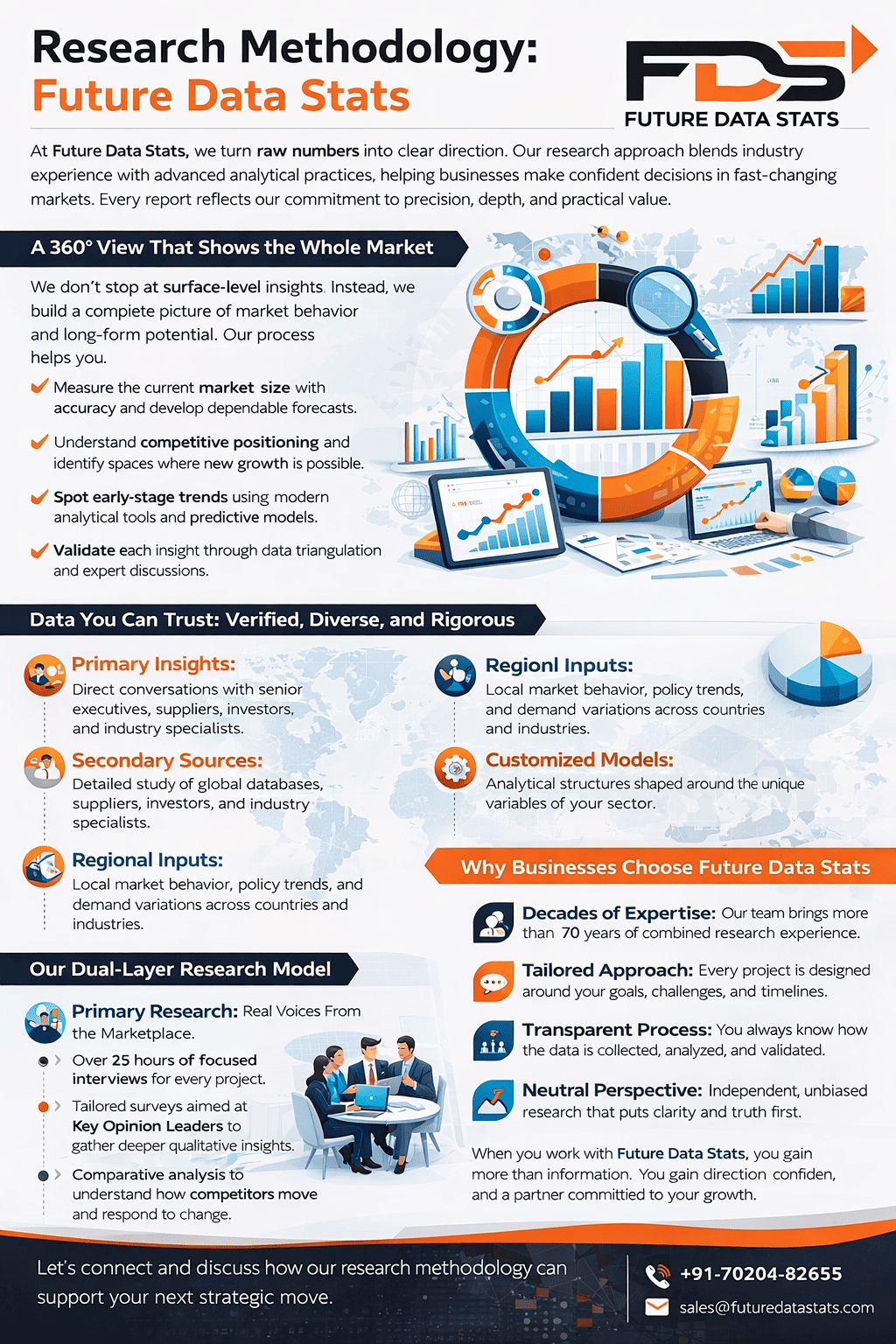
Chapter 9: Research Methodology
- 1 Primary Research
- 2 Secondary Research
- 3 Data Triangulation
- 4 Forecasting Model
List of Tables
- Table:1 Market Size & Forecast by Product Type
- Table:2 Market Size & Forecast by End User
- Table:3 Market Size & Forecast by Application
- Table:4 Market Size & Forecast by Distribution Channel
- Table:5 Regional Market Size Comparison
- Table:6 Competitive Market Share Analysis
- Table:7 Revenue Forecast Summary
List of Figures
- Figure:1 Market Research Framework
- Figure:2 Value Chain Analysis
- Figure:3 Market Dynamics Overview
- Figure:4 Segmentation Structure of Muay Thai Market
- Figure:5 Product Type Revenue Share
- Figure:6 End User Distribution
- Figure:7 Application-Based Market Split
- Figure:8 Distribution Channel Breakdown
- Figure:9 Regional Market Distribution
- Figure:10 Competitive Landscape Mapping
Muay Thai Market segmentation
By Product Type:
- Training Equipment
- Protective Gear
- Apparel
- Accessories
By End User:
- Professional Athletes
- Amateur Practitioners
- Fitness Enthusiasts
- Training Gyms & Academies
By Application:
- Professional Competition
- Training & Conditioning
- Fitness & Recreation
- Self-Defense
By Distribution Channel:
- Online Retail
- Offline Retail
- Specialty Sports Stores
- Gym-based Sales
By Geography:
- North America (USA, Canada, Mexico)
- Europe (UK, Germany, France, Italy, Spain, Rest of Europe)
- Asia-Pacific (China, Japan, Australia, South Korea, India, Rest of Asia-Pacific)
- South America (Brazil, Argentina, Rest of South America)
- Middle East and Africa (GCC Countries, South Africa, Rest of MEA)

Muay Thai Market Dynamic Factors
Drivers:
- Rising fitness awareness boosts participation in combat-based training programs.
- Growing popularity of MMA and combat sports increases Muay Thai adoption.
- Expansion of gyms and academies drives consistent equipment demand.
Restraints:
- High injury risk limits long-term participation for some users.
- Limited professional coaching availability restricts structured training growth.
- High-quality gear costs reduce adoption among price-sensitive users.
Opportunities:
- Online fitness platforms expand Muay Thai training accessibility.
- Rising youth interest in martial arts opens new consumer base.
- Brand collaborations with athletes strengthen premium product demand.
Challenges:
- Intense competition among global and local equipment brands.
- Lack of standardization in training quality across regions.
- Seasonal and trend-based demand fluctuations affect stability.
Muay Thai Market Regional Key Trends
North America:
- Fitness studios integrate Muay Thai into high-intensity workout programs.
- MMA popularity accelerates demand for training equipment and apparel.
- E-commerce channels dominate sports gear distribution growth.
Europe:
- Strong adoption in urban fitness clubs drives steady market expansion.
- Combat sports culture supports structured training academy growth.
- Premium equipment demand rises due to quality-focused consumers.
Asia Pacific:
- Strong cultural roots of Muay Thai support dominant regional participation.
- Thailand remains a global training hub attracting international trainees.
- Rapid gym expansion increases mass-market equipment consumption.
Latin America:
- Growing youth participation fuels martial arts training demand.
- Fitness trends drive adoption in urban sports centers.
- Limited infrastructure slows large-scale academy development.
Middle East & Africa:
- Rising fitness investments support combat sports facility growth.
- Youth engagement in martial arts increases training enrollment.
- Premium sports brands expand presence in urban retail hubs.
Frequently Asked Questions














