
According to insights from Future Data Stats, the Petroleum Reserve Management Market was valued at USD 5.7 billion in 2025. It is expected to grow from USD 6.0 billion in 2026 to USD 8.2 billion by 2033, registering a CAGR of 5.1% during the forecast period (2026–2033).
MARKET OVERVIEW
The Petroleum Reserve Management Market focuses on maximizing the value, longevity, and reliability of hydrocarbon assets through advanced planning, monitoring, and optimization. Companies deploy integrated software, analytics, and engineering services to improve reserve estimation accuracy, enhance recovery strategies, and reduce operational uncertainty. By aligning geological data with financial objectives, organizations strengthen investment decisions, minimize risks, and accelerate production efficiency. This market empowers operators to transform complex reservoir data into actionable insights, ensuring consistent output while maintaining cost discipline and regulatory compliance across global energy portfolios.
“Integrated reserve management platforms boost capital efficiency, speed asset decisions, cut risk, and unlock measurable value across portfolios now!”
The market also serves as a strategic backbone for energy companies aiming to sustain competitiveness in volatile price environments. It enables proactive reservoir planning, real-time performance tracking, and seamless collaboration across technical and financial teams. As operators prioritize digital transformation, reserve management solutions deliver scalable intelligence that supports faster decision-making and improved asset utilization. This purpose-driven approach drives higher recovery rates, extends field life, and unlocks new revenue streams, making it an essential investment for companies seeking long-term profitability and operational resilience.
MARKET DYNAMICS
Operators adopt AI driven reservoir modeling, cloud based data lakes, and digital twins to optimize lifting costs and recovery rates. Firms expand integrated dashboards, “Integrated reserve management platforms boost capital efficiency, speed asset decisions, cut risk, and unlock measurable value across portfolios now!” automate compliance reporting, and scale analytics across assets, widening business scope globally, attracting investors accelerating monetization.
Demand rises as volatility increases and regulators tighten transparency requirements, pushing operators toward unified reserve planning and real time analytics. “Integrated reserve management platforms boost capital efficiency, speed asset decisions, cut risk, and unlock measurable value across portfolios now!” High upfront costs and legacy integration slow adoption, yet partnerships and modular SaaS deployments create opportunities for scaling and margin expansion.
PETROLEUM RESERVE MANAGEMENT MARKET SEGMENTATION ANALYSIS
BY TYPE:
Strategic and government-controlled reserves dominate due to their critical role in national energy resilience and geopolitical leverage. Countries continue expanding Strategic Petroleum Reserves (SPR) to safeguard against supply shocks, conflicts, and economic disruptions. Underground storage options like salt caverns are preferred for their cost efficiency, scalability, and natural insulation benefits. Meanwhile, above-ground tank farms offer operational flexibility and faster access, making them suitable for rapid deployment. The increasing focus on energy independence and policy-driven stockpiling continues to accelerate investments across both public and hybrid reserve structures globally.
""Global reserve strategies are shifting toward hybrid storage models balancing cost efficiency, rapid accessibility, and geopolitical risk mitigation across regions.""
Commercial and private reserves are gaining momentum as corporations seek tighter control over supply chains and pricing volatility. Private sector investments in floating storage and tank farms are driven by arbitrage opportunities and trade flexibility. Depleted reservoirs are also being repurposed, offering cost-effective expansion without new infrastructure development. The integration of commercial reserves into broader trading strategies allows companies to optimize margins. This segment is increasingly shaped by financial incentives, global demand fluctuations, and the need for agile, profit-oriented reserve management approaches.
BY APPLICATION:
Energy security remains the primary driver, with governments prioritizing reserves to ensure uninterrupted supply during crises. Emergency stockpiling frameworks are evolving to address both short-term disruptions and long-term geopolitical uncertainties. Supply chain stabilization also plays a crucial role, particularly in regions vulnerable to logistical bottlenecks or import dependency. These applications are reinforced by regulatory mandates requiring minimum reserve levels. As energy markets become more volatile, the importance of reliable and responsive reserve systems continues to grow, making this segment foundational to national and global energy strategies.
""Applications are increasingly aligned with resilience goals, integrating supply stability, regulatory compliance, and market responsiveness into unified reserve strategies.""
Price regulation and refinery feedstock management are emerging as powerful commercial applications. By strategically releasing or storing petroleum, stakeholders can influence market prices and maintain refinery efficiency. Export optimization further enhances profitability, allowing traders to capitalize on regional price differentials. Inventory and stockpile management systems are also becoming more sophisticated, enabling real-time decision-making. These applications are transforming reserves from passive assets into active tools for revenue generation, operational efficiency, and competitive advantage in global energy markets.
BY SERVICE TYPE:
Monitoring and analytics services are leading the market as stakeholders demand real-time visibility into reserve conditions and performance. Advanced analytics enable predictive insights, helping operators optimize storage utilization and detect anomalies early. Asset integrity management is equally critical, ensuring infrastructure reliability and minimizing risks of leaks or failures. These services are increasingly integrated into centralized platforms, offering seamless control over complex reserve networks. The growing emphasis on safety, compliance, and operational efficiency is driving strong demand for technologically advanced service solutions.
""Service innovation is centered on predictive intelligence, enabling proactive maintenance, enhanced safety, and optimized reserve utilization across diverse storage environments.""
Risk assessment and forecasting services are gaining traction as market volatility intensifies. Companies rely on these tools to anticipate supply disruptions, price fluctuations, and operational risks. Maintenance and inspection services remain essential, particularly for aging infrastructure requiring regular upkeep. Consulting and advisory services are also expanding, guiding stakeholders through regulatory complexities and strategic planning. Together, these services create a comprehensive ecosystem that supports informed decision-making, reduces operational uncertainties, and enhances overall reserve performance in a competitive landscape.
BY TECHNOLOGY:
IoT-based monitoring systems are transforming reserve management by enabling continuous data collection from storage facilities. Sensors track temperature, pressure, and volume, ensuring optimal storage conditions and early detection of issues. SCADA systems further enhance control by providing centralized oversight and automation capabilities. These technologies improve operational efficiency while reducing manual intervention. As digital transformation accelerates, the adoption of connected systems is becoming essential for maintaining competitive advantage and ensuring the reliability of petroleum reserves.
""Technology adoption is accelerating toward interconnected systems, delivering real-time intelligence, automation, and enhanced operational transparency across reserve infrastructures.""
AI and predictive analytics are redefining decision-making processes within the market. These tools analyze vast datasets to forecast demand patterns, optimize inventory levels, and predict maintenance needs. Cloud-based platforms offer scalability and remote access, enabling seamless collaboration across stakeholders. Digital twin technology is also emerging, allowing operators to simulate and optimize storage operations virtually. Together, these innovations are driving smarter, data-driven strategies that enhance efficiency, reduce costs, and unlock new opportunities in petroleum reserve management.
BY END-USER:
Government and regulatory bodies dominate due to their responsibility for national energy security and compliance enforcement. These entities invest heavily in large-scale reserves and advanced management systems to ensure readiness during crises. Oil and gas companies also play a significant role, leveraging reserves to stabilize operations and manage supply fluctuations. The alignment of public and private interests is creating collaborative frameworks that enhance overall market efficiency and resilience.
""End-user dynamics are evolving through public-private collaboration, aligning national security priorities with commercial efficiency and operational agility.""
Energy traders and storage providers are increasingly influential, using reserves as strategic assets for profit maximization. Traders capitalize on market volatility, while logistics providers focus on optimizing storage and transportation efficiency. This segment is driven by the need for flexibility, speed, and cost-effectiveness. As global trade expands, the role of these end-users is becoming more critical, shaping the future of reserve management through innovation and competitive strategies.
BY STORAGE METHOD:
Onshore storage remains dominant due to its cost-effectiveness, scalability, and ease of maintenance. Facilities such as tank farms and underground caverns provide reliable and secure storage solutions. Offshore storage, while more complex, offers strategic advantages in terms of proximity to shipping routes and export hubs. These methods are essential for balancing supply and demand across regions, ensuring efficient distribution and minimizing logistical challenges.
""Storage strategies are diversifying to balance cost, accessibility, and geographic advantage, optimizing supply chain efficiency in global petroleum markets.""
Floating Storage Units (FSUs) are gaining popularity for their flexibility and ability to respond quickly to market changes. These units enable temporary storage during periods of oversupply or price fluctuations, supporting trading strategies. Offshore and floating solutions are particularly valuable in regions with limited land infrastructure. As market dynamics become more unpredictable, the demand for adaptable storage methods continues to rise, driving innovation and investment in this segment.
REGIONAL ANALYSIS:
North America leads the Petroleum Reserve Management Market with strong adoption of advanced analytics, AI-driven reservoir modeling, and integrated asset management platforms. The United States and Canada prioritize efficiency and recovery optimization across mature oilfields, driving demand for predictive tools and cloud-based solutions. Europe follows with a sustainability-focused approach, where operators align reserve strategies with energy transition goals and regulatory compliance. Asia Pacific accelerates growth through rising energy demand, particularly in China and India, where companies invest in digital infrastructure to improve exploration accuracy and production scalability.
“Regional adoption of digital reserve management accelerates efficiency gains, enhances recovery precision, and drives competitive advantage across global oil markets!”
Latin America shows steady expansion as countries like Brazil and Mexico modernize offshore and deepwater reserve management practices. The Middle East & Africa dominate in resource volume, with national oil companies leveraging cutting-edge technologies to maximize output and extend reservoir life. These regions actively invest in integrated solutions to sustain production leadership while reducing operational risks. Across all regions, increasing collaboration, digital transformation, and strategic investments create a high-growth landscape, enabling companies to unlock new value streams and strengthen long-term market positioning.
RECENT DEVELOPMENTS:
- In 28 Jan 2026- Japan’s METI announced a bilateral agreement with the UAE to store 2.5 million barrels of crude in Japanese commercial tanks, enhancing emergency supply chain resilience under its strategic petroleum reserve framework.
- In 15 Dec 2025- The U.S. Department of Energy finalized a contract to repurchase 4.3 million barrels of sour crude for the Strategic Petroleum Reserve, utilizing direct purchase authority to replenish the Bayou Choctaw site.
- In 03 Nov 2025- India’s Ministry of Petroleum and Strategic Energy Reserves Limited completed filling the Padur facility to 100% capacity, adding 2.5 million metric tons of crude as part of its second phase of strategic storage.
- In 19 Sep 2025- The International Energy Agency released a coordinated stockdraw simulation report, confirming that member countries hold over 4.1 billion barrels in public emergency stocks, reaffirming collective response readiness.
- In 07 Aug 2025- South Korea’s Korea National Oil Corporation initiated a commercial-for-strategic swap program, releasing 1.2 million barrels of government-held stockpiles to domestic refiners amid supply disruptions.
KEY MARKET PLAYERS:
- S. Department of Energy (Strategic Petroleum Reserve)
- Korea National Oil Corporation
- Japan Oil, Gas and Metals National Corporation
- International Energy Agency
- China Strategic Petroleum Reserve Office
- Indian Strategic Petroleum Reserves Limited
- Saudi Aramco
- Abu Dhabi National Oil Company
- Kuwait Petroleum Corporation
- QatarEnergy
- Rosneft
- Gazprom Neft
- Petrobras
- PetroChina
- Sinopec
- Eni S.p.A.
- TotalEnergies
- Shell plc
- ExxonMobil Corporation
- Chevron Corporation
Petroleum Reserve Management Market-Table of Contents
- 1. Introduction
- 1.1 Market Definition
- 1.2 Scope of Study
- 1.3 Research Methodology
- 1.4 Assumptions & Limitations
- 2. Executive Summary
- 2.1 Key Findings
- 2.2 Market Snapshot
- 2.3 Analyst Insights
- 3. Market Overview
- 3.1 Market Dynamics
- Drivers
- Restraints
- Opportunities
- Challenges
- 3.2 Value Chain Analysis
- 3.3 Industry Trends
- 3.4 Regulatory Framework
- 3.5 Porter’s Five Forces Analysis
- 3.1 Market Dynamics
- 4. Petroleum Reserve Management Market, By Type
- 4.1 Strategic Petroleum Reserves (SPR)
- 4.2 Commercial Petroleum Reserves
- 4.3 Government-Owned Reserves
- 4.4 Private/Corporate Reserves
- 4.5 Underground Storage
- Salt Caverns
- Depleted Reservoirs
- 4.6 Above-Ground Storage
- Tank Farms
- Floating Storage
- 5. Petroleum Reserve Management Market, By Application
- 5.1 Energy Security & Emergency Supply
- 5.2 Supply Chain Stabilization
- 5.3 Price Regulation & Market Balancing
- 5.4 Refinery Feedstock Management
- 5.5 Export & Trade Optimization
- 5.6 Inventory & Stockpile Management
- 6. Petroleum Reserve Management Market, By Service Type
- 6.1 Reserve Monitoring & Analytics
- 6.2 Asset Integrity Management
- 6.3 Inventory Management Solutions
- 6.4 Risk Assessment & Forecasting
- 6.5 Maintenance & Inspection Services
- 6.6 Consulting & Advisory Services
- 7. Petroleum Reserve Management Market, By Technology
- 7.1 IoT-Based Monitoring Systems
- 7.2 AI & Predictive Analytics
- 7.3 SCADA Systems
- 7.4 Cloud-Based Management Platforms
- 7.5 Digital Twin Technology
- 8. Petroleum Reserve Management Market, By End-User
- 8.1 Government & Regulatory Bodies
- 8.2 Oil & Gas Companies
- 8.3 Energy Traders
- 8.4 Storage & Logistics Providers
- 9. Petroleum Reserve Management Market, By Storage Method
- 9.1 Onshore Storage
- 9.2 Offshore Storage
- 9.3 Floating Storage Units (FSUs)
- 10. Petroleum Reserve Management Market, By Region
- 10.1 North America
- 10.2 Europe
- 10.3 Asia-Pacific
- 10.4 Middle East & Africa
- 10.5 Latin America
- 11. Competitive Landscape
- 11.1 Market Share Analysis
- 11.2 Company Profiles
- 11.3 Strategic Developments
- 11.4 Mergers & Acquisitions
- 11.5 Partnerships & Collaborations
- 12. Key Company Profiles
- Overview
- Financial Performance
- Product Portfolio
- Recent Developments
- 13. Investment & Expansion Analysis
- 13.1 Investment Trends
- 13.2 Expansion Strategies
- 13.3 Infrastructure Development
- 14. Future Outlook & Forecast
- 14.1 Market Forecast (2026–2035)
- 14.2 Emerging Trends
- 14.3 Strategic Recommendations
- 15. Appendix
- 15.1 Abbreviations
- 15.2 References
List of Figures
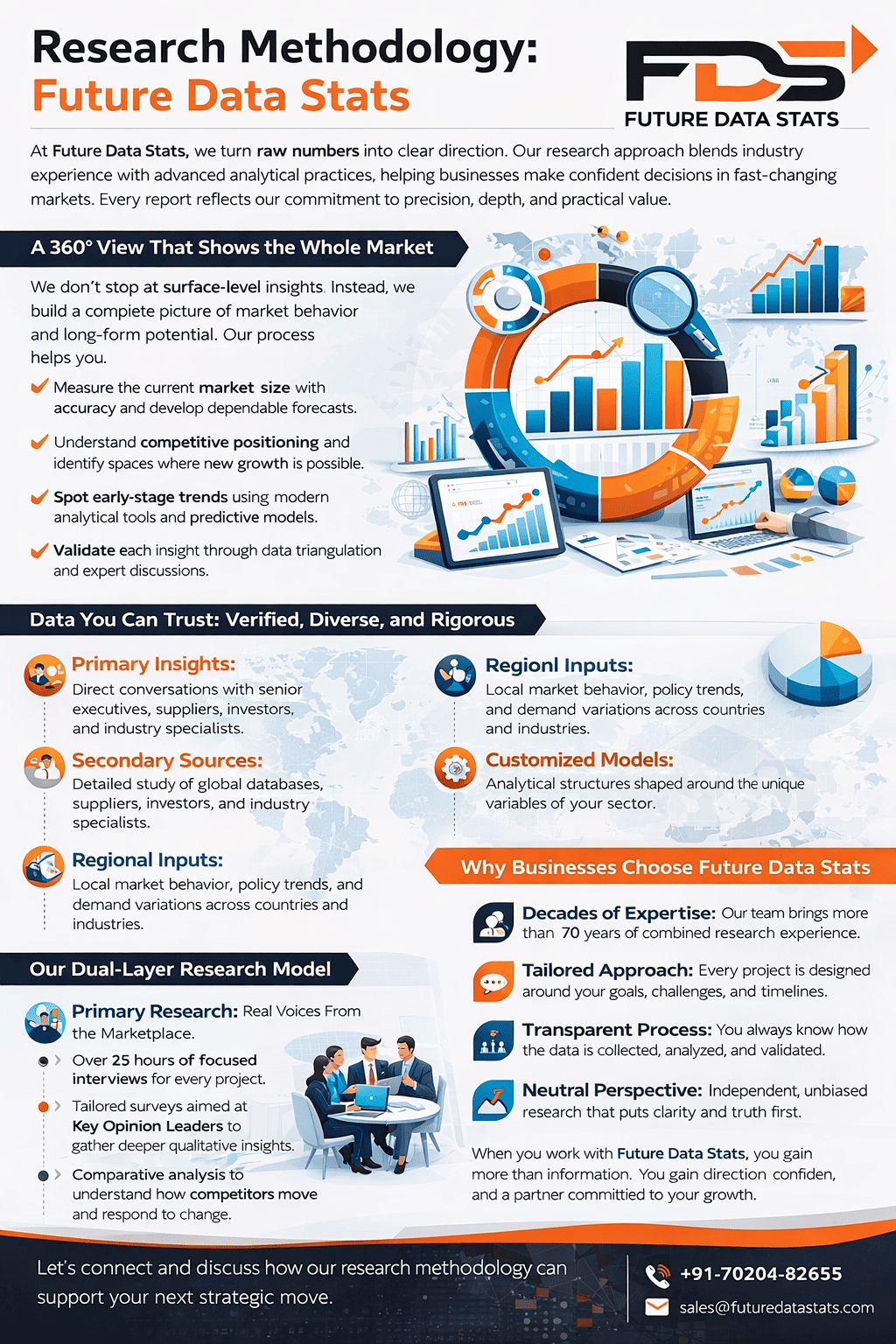
- Figure 1: Petroleum Reserve Management Market Research Methodology
- Figure 2: Market Size & Forecast Overview
- Figure 3: Market Dynamics Framework
- Figure 4: Value Chain Analysis
- Figure 5: Porter’s Five Forces Analysis
- Figure 6: Market Share by Type (%)
- Figure 7: Market Share by Application (%)
- Figure 8: Market Share by Service Type (%)
- Figure 9: Market Share by Technology (%)
- Figure 10: Market Share by End-User (%)
- Figure 11: Market Share by Storage Method (%)
- Figure 12: Regional Market Distribution (%)
- Figure 13: Competitive Landscape Overview
- Figure 14: Investment Trends Analysis
- Figure 15: Future Market Forecast Graph
List of Tables
- Table 1: Market Definition & Scope
- Table 2: Key Assumptions
- Table 3: Market Drivers Impact Analysis
- Table 4: Market Restraints Impact Analysis
- Table 5: Opportunities Analysis
- Table 6: Petroleum Reserve Types Comparison
- Table 7: Application-wise Market Insights
- Table 8: Service Type Analysis
- Table 9: Technology Comparison Matrix
- Table 10: End-User Industry Analysis
- Table 11: Storage Method Comparison
- Table 12: Regional Market Size (2026–2035)
- Table 13: Competitive Market Share (%)
- Table 14: Company Financial Overview
- Table 15: Investment & Expansion Trends
- Table 16: Market Forecast by Segment
Petroleum Reserve Management Market Segmentation
By Type:
- Strategic Petroleum Reserves (SPR)
- Commercial Petroleum Reserves
- Government-Owned Reserves
- Private/Corporate Reserves
- Underground Storage (Salt Caverns, Depleted Reservoirs)
- Above-Ground Storage (Tank Farms, Floating Storage)
By Application:
- Energy Security & Emergency Supply
- Supply Chain Stabilization
- Price Regulation & Market Balancing
- Refinery Feedstock Management
- Export & Trade Optimization
- Inventory & Stockpile Management
By Service Type:
- Reserve Monitoring & Analytics
- Asset Integrity Management
- Inventory Management Solutions
- Risk Assessment & Forecasting
- Maintenance & Inspection Services
- Consulting & Advisory Services
By Technology:
- IoT-Based Monitoring Systems
- AI & Predictive Analytics
- SCADA Systems
- Cloud-Based Management Platforms
- Digital Twin Technology
By End-User:
- Government & Regulatory Bodies
- Oil & Gas Companies
- Energy Traders
- Storage & Logistics Providers
By Storage Method:
- Onshore Storage
- Offshore Storage
- Floating Storage Units (FSUs)
By Geography:
- North America (USA, Canada, Mexico)
- Europe (UK, Germany, France, Italy, Spain, Rest of Europe)
- Asia-Pacific (China, Japan, Australia, South Korea, India, Rest of Asia-Pacific)
- South America (Brazil, Argentina, Rest of South America)
- Middle East and Africa (GCC Countries, South Africa, Rest of MEA)

Petroleum Reserve Management Market Dynamic Factors
Drivers:
- Governments expand crude stockpiles to shield economies from supply shocks.
- Geopolitical tensions compel nations to accelerate reserve replenishment cycles.
- IEA mandates push member countries toward maintaining higher emergency inventory levels.
Restraints:
- Budget constraints limit the scale and speed of new storage infrastructure projects.
- Aging underground caverns and surface facilities require costly, ongoing maintenance.
- Shifting energy transition policies reduce political will for expanding fossil fuel reserves.
Opportunities:
- Public-private leasing models unlock commercial storage capacity for strategic use.
- Digital inventory systems enable real-time stock monitoring and faster drawdown decisions.
- Cross-border storage agreements offer cost-sharing avenues for landlocked nations.
Challenges:
- Maintaining oil quality during extended storage periods demands rigorous technical protocols.
- Balancing rapid release capability with long-term structural integrity strains engineering teams.
- Coordinating multilateral stockdraw responses faces delays from diverging national interests.
Petroleum Reserve Management Market Regional Key Trends
North America:
- US SPR accelerates site life-extension projects to ensure drawdown capacity beyond 2030.
- Canada integrates commercial caverns into federal emergency stockholding framework.
- Mexico modernizes salt dome infrastructure under new energy security legislation.
Europe:
- EU member states fast-track joint oil stockholding to reduce reliance on imported storage services.
- Germany converts depleted salt mines into strategic petroleum reserves with expanded capacity.
- France implements digital inventory tracking across all public and obligated industry stocks.
Asia Pacific:
- India completes second phase of strategic storage, adding 6.5 million metric tons of capacity.
- Japan expands public-private stock-sharing agreements to optimize utilization rates.
- China centralizes reserve management under a unified command structure for faster deployment.
Latin America:
- Brazil leverages pre-salt production revenues to fund new strategic storage facilities.
- Argentina adopts international auditing standards for government-managed petroleum reserves.
- Chile secures long-term storage leases in neighboring countries to offset lack of domestic geology.
Middle East & Africa:
- UAE develops commercial storage hubs that double as host facilities for foreign strategic reserves.
- Saudi Arabia integrates reserve management with crude oil futures trading mechanisms.
- South Africa advances legislative framework to establish formal strategic petroleum stockholding.
Frequently Asked Questions














